02 September 2009

Where's the Real GPS Tracking ROI?

Are you getting the most out of your dollar?


For years now I’ve been selling top-notch GPS tracking equipment to the business world and hearing nothing but the excuse, “We Can’t Afford It” when I talk business-oriented GPS tracking to fellow entrepreneurs. I can always come up with facts and figures that show astounding Return On Investment (ROI) right in their own market. But I;m a little guy, and of course, I was always suspect because I was selling the product.


Well I;m not selling any longer, and this report, from the Aberdeen Group, represents a huge cross-section of the world-wide market. The price is right, the information is priceless. You make the call.


GPS Tracking speakersToday’s powerful GPS-based navigation tools may eventually eliminate the age-old dilemma associated with asking a stranger for directions. With the adoption of such tools and the innovations around the uses of location information, best-in-class companies are driving up resource utilization rates and slashing operating costs to the tune of 21% providing a significant return on investment and a clear leadership position.


Are you getting the most out of your dollar?


Attend this complimentary webinar to:


Discover how best-in-class companies are achieving measurable ROI after deploying a fleet management solution.


Hear for the first time Senior Aberdeen Analyst Sumair Dutta discuss the findings from his latest research report, Service Workforce & Fleet Management – Driving Utilization with Location Intelligence.


Learn how NewWave Communications identified inefficient practices, deployed a fleet management solution and anticipates saving $175,000 during the first year of deployment.


Identify actionable take-aways that you can begin executing immediately in your business to gain a competitive edge, impact your customer’s experience and increase your bottom line.


Register Now


The Return on Investment


Fleet-Specific Metrics Average Change Since Implementation of Fleet Management


  • Idle Times 25%


  • Fleet Utilization 32%


  • Fuel Costs -22%


  • Operating Costs/Vehicle -21% (~$740/vehicle)


  • Daily Mileage -31% (~1,678 miles)


Workforce-Specific Metrics Average Change Since Implementation of Location Intelligence


  • Workforce Productivity 23%


  • Workforce Utilization 25%


Aberdeen Group, May 2009 Register Now

08 January 2009

GPS Tracking Pays at Tax Time Too

(Updated 23 June 2019)

Even if you only use your own car for your business, here's some good reason you want to track using a no monthly cost GPS tracking system.

At the end of the year, you should know how many miles you have driven. But what if any are 'missing'?

And are you sure each deductible mile is properly categorized?

Lose track of even a few hundred miles over the course of a year and you'll be out way more than the cost of one of these simple systems. How much is at risk?


The 2019 optional standard mileage rates used to calculate the deductible costs of operating an automobile for business, charitable, medical or moving purposes are out. Beginning on January 1, 2019, the new standard mileage rates for the deductible use of a car (and vans, pickups or panel trucks) are:
  • 58 cents per mile for business miles driven
  • 20 cents per mile driven for medical or moving purposes
  • 14 cents per mile driven in service of charitable organizations
While gasoline is a significant factor in the mileage rate, other fixed and variable costs, such as depreciation, enter the calculation. The standard mileage rates for business, medical and moving are based on the annual Runzheimer International study of the fixed and variable costs of operating an automobile.

For those nostalgic for the higher deductions of '08, the business mileage rate was 50.5 cents in the first half of 2008 and 58.5 cents in the second half. The medical and moving rate was 19 cents in the first half and 27 cents in the second half.

Keep track, keep legal and keep money in your pocket.

03 January 2009

Will Tin Foil Defeat GPS Tracking?

I get this question a lot on several of my GPS-related blogs:

www.satviz.com
www.gpsbus.com
www.snoop411.com

The answer is, if you can find the antenna for the GPS tracking unit, most likely tin foil will stop your boss from seeing where you are ... or where you aren't.

Of course s/he will also know exactly where and when the tin foil was put in place and where and when it was taken off, so you might want to do alittle planning on that idea before you implement it.

Now if you are being tracked via a GPS-enabled phone, the tin foil will be a bit harder to keep in place .. and also you might consider this: It is likely if you are being tracked via a phone company provided service that the phone company is also tracking your phone's approximate posiiton via the cell sites you connect to. Some of these systems are very sophisticated, able tio locate the phone down to a few meters ... EVEN IF IT DOESN'T HAVE GPS

Yes, you read that correctly. All phone companies have to supply telephone posiitons to emergency services during 911 calls ... it's Federal Law. This means they have to be able to locate non-GPS as well as GPS phones. It's a done deal.

If the phone company elects to provide that service to othe parties ... such as your emplyer ... for a fee of course ... it is likely you have any chopice in the matter, So, before you raid the kitchen cabinet for tin foil, you might instead want to consider:

The best way to avoid being tracked is to turn the phone off. You might get fired, but at least they wont know where you've been.

25 December 2008

Great GPS Tracking Gets Better

It's a great Christmas present when news pops up in your browser that one of your old business friends and former suppliers is expanding and doing well.

I sold Geotab hardware products for several years and found both the products themselves and the support and engineering folks at the company absolutley top drawer.  More importantly their buisness-oriented GPS management software is hands-down the best in the business.

There are a lot of suppliers out there who make good boxes but their software always seems to be oriented toward 'Hey, wow, look at the dots' kind of effort. 

Geptab knows what fleet management is all about, from tracking how fast a truck is going to measuring the time a sweeper is actually sweeping and not just driving around ... highly recopmmend.  I love the format of this site ... looks like a lot of great information to make 2009 a better year for all fleet management folks.


Geotab
is an end-to-end developer of both the devices that are installed in
your vehicles as well as the software that you use to report activity.
Geotab is uniquely positioned to provide a solution that is driven to
respond to your objectives. With Fortune 500 companies as customers,
Geotab continues to drive innovation with value across your company. It
is our focus and capabilities to deliver customer-driven solutions that
sets Geotab apart as a business solution provider that enables your
growth as well as expense reduction. Geotab has been providing
solutions that combine GPS technology for business users over 10 years.
With flexible choices, Geotab provides the most universal base vehicle
platform and scaleable software in the industry. Geotab takes the risk
out of your decision and enables you to focus on your needs.


Great GPS Tracking Gets Better

It's a great Christmas present when news pops up in your browser that one of your old business friends and former suppliers is expanding and doing well.

I sold Geotab hardware products for several years and found both the products themselves and the support and engineering folks at the company absolutley top drawer.  More importantly their buisness-oriented GPS management software is hands-down the best in the business.

There are a lot of suppliers out there who make good boxes but their software always seems to be oriented toward 'Hey, wow, look at the dots' kind of effort. 

Geptab knows what fleet management is all about, from tracking how fast a truck is going to measuring the time a sweeper is actually sweeping and not just driving around ... highly recopmmend.  I love the format of this site ... looks like a lot of great information to make 2009 a better year for all fleet management folks.


Geotab
is an end-to-end developer of both the devices that are installed in
your vehicles as well as the software that you use to report activity.
Geotab is uniquely positioned to provide a solution that is driven to
respond to your objectives. With Fortune 500 companies as customers,
Geotab continues to drive innovation with value across your company. It
is our focus and capabilities to deliver customer-driven solutions that
sets Geotab apart as a business solution provider that enables your
growth as well as expense reduction. Geotab has been providing
solutions that combine GPS technology for business users over 10 years.
With flexible choices, Geotab provides the most universal base vehicle
platform and scaleable software in the industry. Geotab takes the risk
out of your decision and enables you to focus on your needs.


27 September 2008

GPS Tracking Means No Option For Failure

This is a test of a new way to enter content. We shall see…


Curve Ball # 3

That evening, I am activating my SPOT personal locator beacon and one of the items that is needed is the serial number. It is on the device underneath the battery cover. I locate it after unscrewing the cover, hard to do with a pencil I might add. The serial number and authorization number is on a sticker but half of the last number is cut off. I called SPOT’s help line and they said they could get the last number to me within one day. I decide to try a few numbers because the last number looks like either a 5 or 9. I try my luck with the 5 and it works - success! Then I set up my Spot home page and the hour glass appears after I complete the required fields. It is up for fifteen minutes and so I decide to call the help line again. They inform me that their system is down. They said check back in ten minutes. I am not a whiz when it comes to GPS and internet technology but the layman’s question becomes “what if your system is down when I need help?” Read more on Lite Flyer’s blog


I’ve written about the excellent … at least in concept …. SPOT Personal Locator several times in the past. I still think the idea is gangbusters. But I also have written incessantly … I even retired, actually because of the idiocy … of government agencies and commercial companies who provide potentially life-critical services and, especially when the ‘Net is involved, just let failures occur and expect their customers to accept this bullshit.


Strong word? Damn right.


THERE IS NO EXCUSE for a life-saving or life-supporting system to be down. Period. Simple, relatively inexpensive fall back systems and techniques are readily available … if only company management would be less involved with their own compensation packages and ‘exit strategies’ and more thoughtful about what service they have contracted to provide.


Failure is not an option and furthermore, it is not necessary!

14 August 2008

GPS Tracking Busts Bad Employee

Aren’t supervisors supposed to be aquatinted with what’s going on in management?

GPS Busts City Official

Chicago’s superintendent of sewers took a break from his workday and hit the links, but his whereabouts were traced through a cell phone, reports the Chicago Sun-Times. Winston Cole has been placed on administrative leave with pay after he was tracked to a suburban golf course when he was supposed to be on the clock at the Water Management Department’s South District headquarters. When GPS-equipped cell phones were distributed to city employees and tracking devices were installed on city trucks, the stated goal was to increase employee productivity. Sounds like it’s working.

I could go on for days on this one. One of my first clients was county government. They bought a few vehicle units for a test and proof of concept. They installed them With the Knowledge of the Employees (something I always recommend) on the county-owned cars of several supervisors. What do you think happened the very first week of operation? Yep! One of the supervisory officials (who, remember, knew this was on the car) went to a golf course for an afternoon — while on the taxpayer’s’ clock! Amazing.

Another client was in the alcoholic beverage distribution industry. Obviously, they are even more interested in the prevention of drunk driving and substance abuse of employees than many other industries.

I sent a letter to the company president offering to make presentation to him on the advantages his company could realize by using GPS tracking for his company vehicles and he took my up on an offer to track one or more of his trucks as a trial. He took me up on the offer.

The vehicle he chose was a pickup that was assigned to one of his key supervisors. In this case he didn’t inform the employee and we installed the unit in a covert manner. In fairness, the president did hold a meeting the same week we installed the test unit to emphasize the company policies on drinking and driving and proper use of company vehicles. Should have been a clue, no?

Well the first week’s data showed that the night of the day of the safety meeting the ‘tracked’ supervisor went to a bar after work and traveled to three other bars where he spent his time … perhaps drinking only soft drinks? … until 4 am and then apparently took a nap in the bar parking lot (the bar he was at closed at 4 am) and then reported to work at 6 am the following day. All those hours at various bars, tow hours maximum of sleep and then back to work on busy streets in a company vehicle! Just how stupid was this guy?

You should not assume the worst about your employees. The vast majority are hardworking, dedicated and truthful. But the number of ‘bad apples’ out there certainly has amazed me … GPS Tracking is one of the better, faster, cheaper ways to separate the whet from the chaff.

28 October 2005

Still incompetent after all these years ..

http://www.app.com/apps/pbcs.dll/article?AID=/20051026/OPINION/510260394/1030

Comparing county vehicle fleet sizes meaningless
Posted by the Asbury Park Press on 10/26/05
BY THOMAS J. POWERS
Once again, the Press has published an article under the banner of "news" that was critical of Monmouth County. This newspaper's latest muckraking of the county's vehicle fleet carried no news, only the goal of furthering its own political agenda. ("Driving ahead: Monmouth's fleet now leads state," Oct. 16.) County staff members have spent several weeks engaged in an ongoing dialogue with your reporter, and the fleet information was fully explained.
Early this year, reporters from this newspaper requested a list of vehicles approved for commutation. Soon afterward, those same reporters asked for a vehicle inventory. We queried our database for "fleet vehicles" and supplied them with that list. However, due to the way our database was constructed and categorized, that search resulted in some categories of vehicles being omitted. We have since streamlined the database to avoid this confusion. At no time were any vehicles unaccounted for. To imply otherwise is irresponsible.

Mr. Powers, to imply that you know what you do not know is irresponsible as well.  To imply that a problem was fixed when indeed it has not been is irresponsible also,
I posted a few days ago about the incompetent management of Monmouth County’s fleet.  Powers is one of the county commissioners, elected to serve the people and watch out for this kind of scandalous mismanagement.  
Read his article carefully.  It’s nothing but a string of excuses and obfuscations.  “At no time were any vehicles unaccounted for  ...”  Well hello, Mr. Powers, you queried your system for a count of vehcuiles and some vehicles were not accounted for.  The fact that after the newspaper took you to task you fumbled around and found errors in the system (who paid for that system and who trained county personnel in its use, by the way?  County the number of vehicles you own isn’t exactly rocket science..). Anyway, the fact that you manually found the vehicles in question after not being able to find them the first time via your official accounting system tells me that yes, indeed, vehicles were unaccounted for.  To my mind I still have no confidence that you have found all the vehicles yet.

Again I implore my readers to get on the backs of those who manage your government fleets and force them to be accountable.  Passing off bogus information and then back-pedaling and revising the info when a newspaper reporter proves he or she knows more than the responsible officials is not acceptable performance.  You can talk about how many people in the world love the smell, but rotten cheese still stinks no matter what kind of face you try to put on it.

27 October 2005

California's Missing Vehicle Dilemma

http://www.telematicsjournal.com/content/topstories/982.html

Well, here we are folks, once again, another state who can't find a huge percentage of their vehicles.

The article I link to above actually promotes one of my competitors ... but I don't care. I'm so heartily sick of the head-in-the sand attitude of many of today's fleet managers that I don't care if they buy from a competitor, as long as the buy.

An average state vehicle represents an initial investment in the $20K range. Over the life of the vehicle the tax payer can count on spending that much and more in maintenance and fuel. Yet managers seem to think it's totally acceptable to have thousands of vehicles and hundreds of thousands of miles of use completely un-accounted for.

Next Tuesday I vote in a state election (Colorado) where the major ballot question regards letting the state keep a budget surplus that they are legally obligated to return to the tax payers. You just might be able to guess which way I am going to vote on that issue.

It's your tax dollar. Are you going to hold your state, county and city accountable, or are you going to let them play golf on the waste, which originally was yours?

26 October 2005

Measuring and managing

http://www.khqa.com/news/headlines/1919942.html

This is just one of hundreds of articles and thousands of companies staring down the barrel of the same problem.

Fuel costs are out of proportion to profit potential and whatever the reason, it's not going to get better any time soon.

With most business costs, the old bean counter/belt tightener approach works fine ... business expense X costs too much, well the just put on the manager's hat and order everyone to buy less X. But if your business is trucking for hire, or you need trucks to move your only profit-making products, you just can't 'do less' ... profits will decrease faster than expenses.

There's a way that will help some businesses make it through this sticky wicket. The lucky ones will be those businesses who actually have a bonafide business plan. It's not enough to own trucks and take on what loads you can get for whatever price you can get .. you have to know how much profit is in each load and turn down those which just burn miles and fuel and break even .. or worse.

To do this, there's no other intelligent way in today's world than to track the vehicles with GPS. Whether you use the 'old reliable' Qualcomm or a cheaper, more precise system, if you can't measure, you can't manage ... and over this coming winter ... those who don't manage to manage properly won't be managing anything come springs.

Dave's thought for the day ... if you're thinking of buying a newer truck or expanding your fleet, wait until Q1 in 2006, there's going to be a lot of good deals on the market.

25 October 2005

Does Business Have A Profit Motive Or Are We Just Playing Golf And Not Caring

Whenever I hear about national problems, the economy, education, war in Iraq, massive hurricane damage in the South, high gas prices, hard roads to profit in business, etc., and whenever I look at my company's sales record and listen to the often mindless sales objections from some business owners when I show them where their profits are leaking away and show them how I can apply a life-saving band aid.

A great many business owners just want to ignore the benefits of GPS tracking and waste reduction/profit enhancement, but there's one always notable exception... Golf Course owners.

See: http://tinyurl.com/dpxz9

No matter what the state of the economy, the country's fortunes of war, the season (hello, winter is coming on), there's always money to cater to add-on luxuries. When it comes to the (so-called) game of golf, I'm kind of the Furio Gunta type .. "Stupid-a f*c*ing game" but I certainly need to think about re-tooling and focusing my marketing on an industry who can use GPS, but doesn't need it, rather than on small businessmen who need it but won't use it.

24 October 2005

Location, location, location, zero in on pinpoint accuracy

Some interesting news in the Mercury this morning:
http://www.mercurynews.com/mld/mercurynews/business/technology/personal_technology/12982739.htm
Although the Mercury News is a much more technically oriented paper than many, they still manage to mix a lot of fact with fiction.

Ordinary commercial consumer-grade GPS receivers average about 15 meters CEP in today's world. CEP is Circular Error Probable and is normally specified at 95%. In non-gobbly-gook this means that 95% of the time you receiver will indicate within 15 meters (49 feet) of the actual position. The other 5% of the time? Unknown, but often very close. In my own use I have often observed accuracy at least this good, even better, provided the unit has an antenna with a good view of the sky. In a large city with many tall buildings the "urban canyon" effect can degrade the accuracy by quite a bit, but again in well designed units this degradation normally averages out pretty close to the commercial spec.

There are a number of ways of enhancing the basic commercial signal. The most common today is the WAAS, Weider Area Augmentation System, devised and operated by the US FAA to make commercial-grade GPS more capable. WAAS will usually reduce the CEP to 5 meters or less ... the problem is, so few manufacturers of consumer-grade equipment have come on board to use it.

The Mercury News article, though, makes one think that accuracies down into the centimeter range are still a research dream. If one has the need for that kind of accuracy, it's available off the shelf today from various makers (Garmin and Leica are two of the leaders) of survey-grade GPS. These units cost 10 or more time as much as consumer grade boxes, but can easily give centimeter accuracy with the right options and operator training.

So, what level of accuracy do you think you need?

23 October 2005

Drinking and driving: Should laws get tougher?

Interesting article today that's not directly GPS-related:
http://www.bergen.com/page.php?qstr=eXJpcnk3ZjczN2Y3dnFlZUVFeXk1JmZnYmVsN2Y3dnFlZUVFeXk2Nzk5MDk1JnlyaXJ5N2Y3MTdmN3ZxZWVFRXl5Mg==

It is, however a subject near and dear to my heart ... and it often relates to my business because many clients use GPS tracking as part of an overall risk management program that includes monitoring driving that indicates a high risk for DUI. One client in Denver found one of his supervisors spending night after night with his company-furnished truck parked at bars until the very wee hours of the morning and then driving in to start an early shift .. sometimes with apparently no sleep at all.

In general I think this is one of those national debates that shouldn't be a debate at all. I've been a pilot for 40 years now and the FAA rule is very simple .. no alcohol at all. The general pilot's rule of thumb is 12 hours, bottle to throttle. There are many cases where the case could be made that it's easier to fly under the influence than drive .. in the world of aircraft there are not nearly the number of critical situations per hour of operation than there are with driving a car in traffic, yet the rule makes perfect sense and I have never violated it, nor do I ever intend to.

If I take a gun and walk down the street and shoot someone, I'm going to be caught and charged with a felony, for sure. Almost certainly, assault with a deadly weapon. If the person dies, I'm going to be charged with manslaughter at the least, most probably some degree of murder.

Why have we spent the last 80 or 90 years or so arguing about various degrees of intoxication while driving a deadly weapon ... an automobile?

This situation would be laughable if it wasn't so deadly serious. if, as an example, I somehow slipped the bonds of sanity and decided to murder someone, there's no doubt in my mind how I'd do it. I'd have a few drinks to get some alcohol in my system, lie in wait for the victim and run them down. When i was sure they were dead I'd chug-a-lug some more booze so that by the time the police got there I'd be well and surely drunk.

What would I get? In many states, with no prior record perhaps a fine and probation .. maybe six months in jail as the worst case. is there any other method of murder one can think of where the potential penalties are anywhere near as low?

I thought the statistics for DC were especially interesting. look at the reduction in deaths with their .01 BAC law. I drove for some years in Japan where they take things even more seriously .. the police have a wand that measures the presence of alcohol in the air .. they stick it in your car window, it comes up positive, you're busted.

Do we want to save lives, or do we want to argue and make the lawyers rich?

22 October 2005

There's much more to GPS than navigation or tracking 'things'

Many of my readers know that I have a significant interest in the Philippines ... in fact, sometime over the next few years I intend to make the country my permanent home. An acquaintance of mine publishes an interesting blog that frequently revolves around Philippine politics:
http://houseonahill.net/
While posting a reply to one of her recent blog entries on the rights of farmers in her country, I decided I'd repost the comment here to broaden its audience.

So many of us in today's world think only of GPS as a technogeek tool for business and personal pleasure, but GPS has the power to effect dramatic and dynamic change in people's and nation's lives. So here's my morning post to the "Sassy Lawyer"
----------
Very good topic, and good analysis, Sassy. For some reason we seem to have lost the focus on the economics of agriculture that is the true basis for a nations wealth.

The US did not become rich because of some magic after a group of generally poor rag-tag revolutionaries declared their independence, it became rich because it became the food supplier for the world, based on a political system that gave farmers substantial 'say' in government.

When I was a schoolboy and first became aware of the Philippines, it seemed a success story of a former commonwealth/possession becoming independent and feeding itself and a large portion of Asia.

40 years later the Philippines imports a huge fraction of its food and, as you point out, farmers are disenfranchised over huge segments of Philippine agriculture.

One of my technical specialties is the GPS and ways to apply its use to business and government. The first significant non-defense government use of the system I became aware of was a huge land reform program in Thailand where GPS was used to survey large land owner's holding for equitable distribution to tenant (serf) farmers. The large landowners had lobbied for years that the cost of breaking up the land by standard survey methods was cost-prohibitive. It may not be a coincidence that since significant land reform has taken place over the last 20 years in Thailand (synopsis here: http://tinyurl.com/be3y4), the rice import/export positions of the Philippines and Thailand have essentially reversed.

Although removing farmers from serfdom is a significant cause in and of itself, the benefits to the nation would prove tremendously larger than just the primary issue of 'doing the right thing' ... in spite of all the known and imagined defects of presidents and their governments the underlying cause of many of today's Philippine national 'ills' is rooted in the abject failure of Asia's best agrarian system being allowed to deteriorate to one of the worst.

All the Si's and Ayala's can not make the country whole unless there are 'common folk' with enough money to shop in the malls and subscribe to the telephone services.

Again. a worthy subject for future attention, should you feel so inclined.

Best regards
Dave
-----------------

21 October 2005

GPS and Domestic Violence

A good article in the Boston Globe today that attempts to address a problem that we, as a nation, are just doing abysmally at solving. Full text:
http://www.boston.com/news/local/massachusetts/articles/2005/10/21/gps_urged_vs_domestic_violence/

About 1500 women are killed each year by violent partners (almost always males)(Source: FBI Uniform Crime Statistics). There is no reliable statistic for the number of women beaten, but one empirically knows it's much higher than those killed ... this alone is a comment on our society in that the predominantly male FBI doesn't even bother with beatings ... must be many men out there who believe a wife is always someone who can benefit from a good thumping when she's 'wrong'. There's some dynamic in the human male that seems to bring out the worst whenever marriage/partnership relationships 'go south'.

The legal 'cure' is for a woman who feels threatened to obtain a TRO ... Temporary Restraining Order from a court to instruct the potentially abusive partner to leave her (and her children) alone. Frequently these TROs contain provisions that restrict the subject of the order from approaching the protected person closer than a certain distance.

I don't have a firm statistic but it appears that a huge percentage of physically abused or murdered persons were already under the "protection" of a TRO. If a man takes the notion to go wild and commit violence the existence of a piece of paper from a civil court instructing him not to do so has little or no effect. A person with murder in their heart knows that if apprehended they face severe criminal charges .. the addition of some civil penalty on top of that has little more weight than a fly.

The Massachusetts initiative has two very important features. Number one, unless violation of a TRO is made a felony there is little police can do ... as it exists today in many states violating a civil TRO has about the same legal consequences as failing to license your dog. This places law enforcement in a no-win situation. If the suspected offender brandishes a weapon or makes other obvious threats then he/she can be arrested on some criminal charge ... but absent any evidence of criminal activity, violating the TRO is not really something the police can do much about.

The second important point is the proposal to use GPS devices to monitor the compliance with the order. At such a nominal cost, $10 a day, it sounds like a real bargain to the state. if it were my program, I'd impose the daily monitoring fee upon the subject ... and perhaps refund him at a later date for good behavior if the order was never violated. I don't know how good the chances are for this initiative but I applaud it and hope the idea spreads to other states.

There's an old fable about a dangerous cliff and the debate by authorities if it would be more practical to put a safety railing at the top of the cliff or station and ambulance down at the bottom. As of today, the USA's main response to domestic violence has been to place the ambulance at the bottom. Guardrails (or GPS) could save more lives and cost a lot less both in dollars and in pain.

19 October 2005

Thrifty Car Rental Introduces GPS Navigation

Thrifty Car Rental Introduces GPS Navigation

TULSA, Okla., Oct. 18 /PRNewswire-FirstCall/ -- Thrifty Car Rental, a subsidiary of Dollar Thrifty Automotive Group, Inc. (NYSE: DTG - News), today announced it would begin offering GPS-enabled (Global Positioning System) navigation via an optimized Garmin StreetPilot c330 at 138 popular locations in the U.S. and Canada effective October 18, 2005.
http://biz.yahoo.com/prnews/051018/datu057.html?.v=19

Here’s another blessing/curse, depending upon the feelings of the rental company. Those who see every GPS offering as an intrusive snoop into their private lives are going to feel it’s just more ‘big brother’ in action. In fairness, Thrifty is doing this right, because it’s a service the customer has to ask for _and pay for_ … more on that below.

For those of us who use rental cars frequently in unfamiliar areas it’s definitely a blessing. Wish I had a dollar for every time I blasted past my hotel and had to back track, tired, distracted and short on sleep before an early morning meeting. Worse yet is the mad dash to the airport wondering where the closest gas station is so I can fuel my rented chariot and zip on into the vehicle turn-in lane without going miles out of the way or making a U-turn across lanes of busy traffic.

I can see a business reason behind Thrifty’s daily charge … $9.95… what goes on a vehicle has to be paid for or there’s no reason to be in the rental business, but I must say the amount seems a little ridiculous in today’s world of falling electronic prices. The average rental car is kept in service for 2 years or 20,000 miles. I’m pretty sure that means each car will be rented out several hundred times. Don’t know exactly how much Thrifty is paying for these units but the current street price is well under $1,000 in single quantities so one can be pretty sure Thrifty paid a lot less in quantity. There is essentially no operating cost … perhaps $50 each to install in each vehicle … so Thrifty stands to make at least 200% profit on the deal. Even though I’m a dyed in the wool GPS enthusiast I would have to think twice before I added $10 bucks a day plus tax to my own bill.

That brings up what I feel is the most important thing to glean from this announcement. Even though GPS devices are making their way into the consumer world in ever increasing areas, they are still being treated as a luxury or ‘gizmo’ rather than the utility that they truly are. If I were setting up “Dave’s Auto Rent” you can be sure that GPS would form one of the backbones of my business … as would on-site refueling … one of the biggest detriments to rental convenience.

If I invest money in #20,000 plus automobile and rent them out to ever Tom, Dick and Mary I want to be able to know where they are and how badly they are being abused. Instead of a thousand-dollar receive only unit that gives drivers directions, I’d use a system that duplicated the Street Pilot’s feature plus enabled me to locate the vehicle at any time. The loss prevention and risk management factors alone can pay for the system in a year, easily.

The second biggest profit disincentive I see is the abysmal state of fuel handling. Rental car companies either try to sell you a full tank of gas and let you give up the amount that’s in the car when you return it .. what if you buy a full tank and only drive 40 or 50 miles? Or else let you wander around trying to find a place to fill up before turn-in. Not only are both of these options customer-unfriendly, but they cost money … because they take time and when a customer has a car for a day and is wandering around looking for gas the car can’t be rented out to another customer, the same day, exactly as it can be as soon as the first client returns it. It’s absolutely dumb not to have fuel available and just charge the customer market rate for the fuel used … the cars that go out with the ‘return empty’ option get filled up before re-rent anyway … they companies are already providing the service to a significant fraction of their users, so why not just save the wasted time … and make a lot of satisfied customers.

When I rent a car for business I go completely on price … all the “Hertz Number One” services in the world are not worth any extra costs to me … but if a company saw the way to maximize their rate of return on the rental by giving me guidance and a sensible deal on the fuel I’d become a ‘one brand’ guy overnight.

16 October 2005

Driving Ahead .. Taking The Lead in Bad Management

Posted by the Asbury Park Press on 10/16/05BY BOB CULLINANESTAFF WRITER
A new inventory of Monmouth County vehicles reveals the county has 1,049 cars, trucks and buses, which makes it the largest county vehicle fleet in the state.It is an increase of 188 vehicles over the inventory the county reported five months ago....
(full article here:
http://www.app.com/apps/pbcs.dll/article?AID=/20051016/NEWS/510160427

There have been times I am discounted or shunted aside as just a grouchy old curmudgeon. Well, I am older than some (60 this year, the start of middle age, yes?) and I probably am a curmudgeon, but that doesn't make my ideas any less valuable.

There are about 3200 counties in the United States (Parishes in Louisiana and Boroughs in Alaska) (and 10 or so equivalent subdivisions in each Canadian Province) and a great many of them are operating no better than Monmouth County, New Jersey. Imagine personally not knowing where 118 vehicles are .. not being able to count your personal or business assets within a hundred or so when asked for an official inventory? If it were your personal bank funds you'd probably be filing bankruptcy, or your business would be in tax court.

On average the managers of these entities earn on average over $68,000 a year to take care of your tax dollar.

It's time now that you, as an individual tax payer to take a stand and demand better. It's no secret that I sell GPS services to counties, other political sub-divisions and individual businesses. This is not, however, a sales pitch for my services.

If your county (city, state, etc.) doesn't know within a hundred or so vehicles how many they spent your money on, if they are furnishing take home vehicles to hundreds of government employees, then they don't need GPS ... at least not at first ... they need a good swift kick in the you-know-where to get them earning their $68K per year.

It's up to you, as individual citizens .. no one curmudgeon can handle 3000 plus counties. (If you want to know my reputation with the manager of my home county fleet ... just call him ... he doesn't want to manage or be manged... what about yours?

15 October 2005

It's not just tracking driver's lunch hours, GPS can be life itself

Terrence Nguyen has a neat article in Fleetowner about (old) new technology helping trucking companies help others: HURRICANE IMPACT: How one carrier rode to the rescue by Terrence Nguyen, web editor.

After Hurricane Katrina ravaged the Gulf Coast, fleets turned to satellite communication systems as the only reliable means of communication when cellular links and landlines failed. Pelzer, SC-based Owen-Kennedy Specialized Transport sent a 4x4 pickup -- normally used to tow horses to horse shows -- equipped with a Qualcomm OmniTRACS mobile communications system to Bay St. Louis, MS. The pickup was used to find a route for a larger truck, also equipped with the system and hauling a trailer full of supplies, to reach the Bay St. Louis area....

The Owen-Kennedy folks use the venerable OmniTracs product from my friends at Qualcomm. Although the design is dated and the system is expensive the OmniTRACS is what old time bush pilots called "hell for stout" ... they just keep working and producing profit for their users and enhancing safety for their equipped drivers ... and everyone that driver can see and assist.

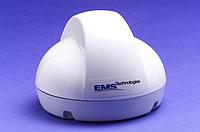
Friends of mine from a small company here in the Springs, Insite Technologies have been working a pilot program for the American Red Cross using a system similar to OmniTRACS but updated and streamlined for today's market. When the storm hit they packed up some spare truck units, demonstration equipment and some loaners from the manufacturer, EMS Technologies . More than 20 units were installed under field conditions and the Red Cross immediately put the, to work tracking vital post-Katrina relief supplies and personnel.

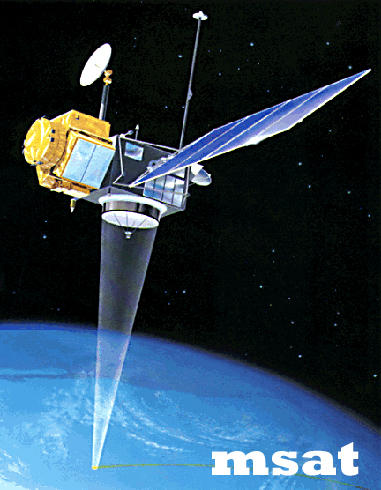
Then came Rita. Several times Red Cross vehicles were the only source of communicating for a number of towns in the storm's path. Many folks just don't know how devastating the loss of communication in a major storm can be. Naturally, you can forget about wired terrestrial phones ... they stop working for days or weeks until cables and microwave kinks are repaired. The cellular phone system, voice and data actually is just an overlay to the wired phone system and is built even less robustly, so it's either out of service, or in the rare case that a cell site is working, it's overloaded immediately. Even voice satellite phones suffer from extreme weather conditions and often fail to connect in the worst weather. The only reliably means of getting through is a system that uses satellites to send and receive the data and that operates at a frequency which is not severely affected by weather ... here's one example, the MSAT system which orbits continuously in the southern sky over the US. No weather or terrorists events on earth can affect these birds.

If you need to talk about these kind of systems or want to learn more about communications that just won't stop, just give me a shout.

05 October 2005

Pay your insurance by the mile? Can do

Now here's a pretty thoughtful and intelligent use for vehicle GPS tracking. One of those, "Wow, why didn't I think of that" ideas:
http://www.trafficmaster.co.uk/shownews.cfm?num=375

Basically, an insurance company is going to charge for auto insurance by use. Makes sense when you stop to think about it. If a driver happens to use his vehicle very little, he or she pays an extraordinarily high cost per mile driven for insurance. If our example is is very high mileage driver, he or she is getting a bargain per mile and the insurance company is far more exposed.

Stick an unobtrusive tracker on the vehicle and the insurer can charge exactly the amount that is fair to both customer and client. They don't mention it in the press release, but th opportunity for performance monitoring is certainly there ... detecting excessive speed and other high risk behaviors.

Too much like big brother? For some, perhaps, but the alternative is everyone paying too much (to cover unknown eventualities) for a service which ought to be easily measurable and billable.

Oh, an yes, perhaps save a few lives too.

03 October 2005

Cabbies protest proposal to install GPS in vehicles

Well, here we go again with more drivers who are used to running amok and acting like they have a license to steal from management whining, complaining and protesting about a system that actually could help them stay safer and earn more money. read the Newsday article here:
http://tinyurl.com/comb9

Basically the New York Taxi Commission, sick of the complaints from drivers "taking the long way 'round", congregating in parts of the city so there are no cabs in others and in general being the but of jokes and war stories world-wide has decided to discuss having new cabs equipped with GPS.

The drivers, somewhat understandably, don't want to hear about it, because they have been left to run their cabs any which way they want to since the days the cabs were horse drawn.

Not only would modern technology eliminate arguments of abuse ... thereby protecting the driver for false accusations just as much as protecting the traveling public from rip offs, but it's a proven fact that GPS-dispatched cabs have a higher load factor .. and drivers only make money when the flag is down and they are carrying fares.

The costs quoted in the article are absolutely bogus .. it's disappointing to me that every reporter in the 20 or 30 repetitions of this article has just repeated them as if they were fact ... a decent system, per cab could be had for $5 or $600 with costs for dispatch, control and safety messages on the order of a dollar per shift. Sometimes I wonder if the 21st century will ever get here.